
Workflow automation
Published September 23, 2026
Excel is no longer enough for your business when managing spreadsheets takes more time than actually working with the data. Common warning signs include duplicate information, manual data entry, disorganized order management, complicated approval processes, and reporting that depends on a single employee. If spreadsheets have become the main tool for managing your business processes, it may be time to switch to a connected business application like Tabidoo.
Author Tabidoo
6 minutes to read
The problem isn’t necessarily Excel itself. The problem starts when your entire business depends on it.
Orders_final.xlsx. Orders_final2.xlsx. Orders_ACTUALLY_final.xlsx. Sound familiar?
When several people work with different copies of the same file, there’s a growing risk that important decisions will be based on outdated information. Modern Excel supports real-time collaboration, but that alone doesn’t solve the problem of maintaining multiple disconnected records across a company.
What do you need instead? A single place where authorized employees can access up-to-date information and where related data is connected.
A new customer? Add them to the sales spreadsheet. Then to the order management file. Next, update the management report. And don’t forget the contact list. The problem isn’t just the time spent copying information. Every additional manual entry creates another opportunity for errors.
Connected data is the solution. In Tabidoo, for example, you can link a customer to their orders, documents, or service requests. There’s no need to create another separate record for the same customer every time.
Excel can show you that an order is waiting for approval. But who needs to approve the next step? Who gets notified? And what happens when the person responsible goes on vacation? If the answers exist only in employees’ heads, your business isn’t being managed by a system. It’s being managed by their memory.
This is where business process automation comes in. In Tabidoo, you can configure workflows that trigger notifications or follow-up actions based on status changes or other events.
The result isn’t just less administration. It’s also clearer accountability.
It’s Monday morning, and management wants to know how many orders are in progress, which ones are delayed, and how individual departments are performing. Cue the emails, updates, and endless file merging. Creating the report itself might take just a few minutes. Getting the right data together can take half a day.
When information is stored in a connected system, you can create up-to-date dashboards without repeatedly gathering and combining data manually.
The important question isn’t how quickly you can create a report. It’s how quickly you can access reliable data to build it.
Sales needs customer information. The service team needs access to related jobs. Management needs performance results. HR needs employee records. But not everyone should have access to everything. If you manage permissions by emailing different versions of spreadsheets, you’re increasing administrative work and the risk of unintentionally sharing sensitive information.
Business applications allow you to configure user roles and permissions based on who needs access to which data.
With Tabidoo, you can create a shared environment for different departments without forcing each team to work in its own isolated file.
A new product, service, or department comes along. And with it, another Excel file. Before long, your business is no longer focused on improving processes. Instead, you’re trying to keep track of an ever-growing collection of spreadsheets. That’s one of the clearest signs that your original solution is no longer keeping up with your company’s size and needs.
Instead of adding more spreadsheets, it’s better to expand the capabilities of a single system.
Tabidoo allows you to start with a simple application and gradually add new features, connected data, and automations.
You need to add a new field, adjust an approval process, or connect order management with another business activity. But nobody wants to touch the existing spreadsheet because it contains dozens of formulas and macros that only one person understands. That’s the moment when a tool stops helping your business and starts holding it back.
With a no-code/low-code platform, many changes can be made through a visual editor. And with Tabidoo AI, you can also create and modify applications using natural language instructions. Technology should adapt to your business. Not the other way around.
You don’t have to wait until something goes wrong. Ask yourself three questions:
If you’re not particularly happy with your answers, it’s probably time to consider a change. And that doesn’t necessarily mean spending months implementing a new information system.
The simplest approach is to choose one problematic spreadsheet and turn it into a custom business application. You don’t need to change every process at once. With Tabidoo AI, you can start with an existing Excel file. Upload your data, describe how you want the application to work, and let AI help you build the first version.
You can then add permissions, automations, connections to other business areas, and dashboards. Excel doesn’t have to disappear from your life. It just doesn’t have to do the job of an entire business information system anymore.
Excel remains a useful tool for calculations, analysis, and one-off reports. But when your business grows and spreadsheets turn into a confusing web of dependencies, it’s time to give your data a better structure.
Tabidoo allows you to turn individual spreadsheets into connected business applications that adapt to your processes and can grow alongside your company.
Take a spreadsheet you’re already using and discover how Tabidoo AI can help you turn it into your own business application.
Workflow automation

Reports
Multilingual
Quick setup, zero risk, full control.
No trial limits
No user fees
No credit card required
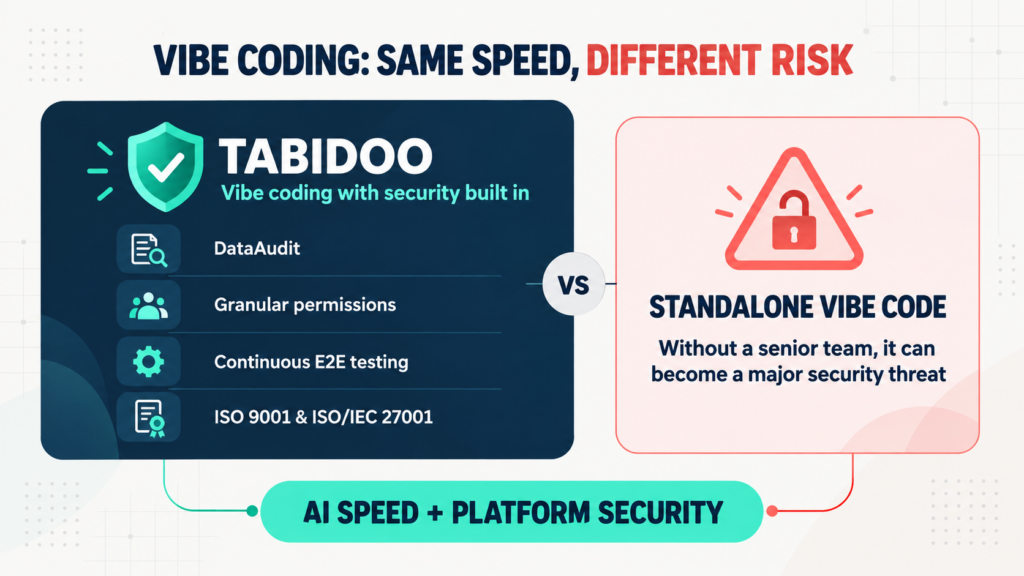
Vibe coding delivers speed, but not automatic security. Tabidoo combines AI with DataAudit, granular permissions, continuous E2E testing and certified processes.
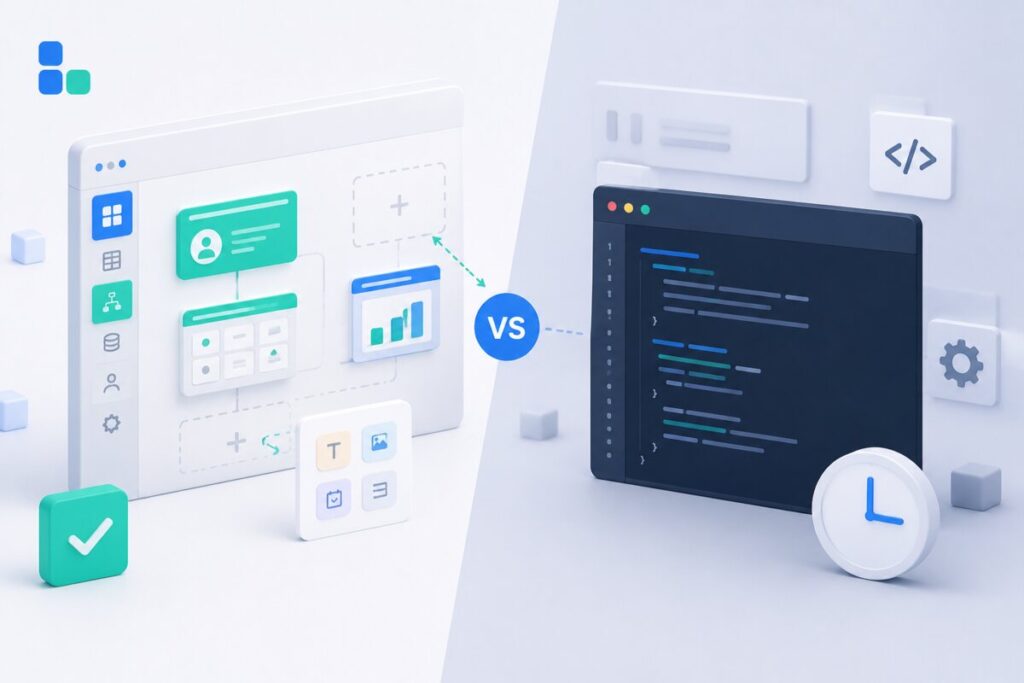
Learn when to build an internal app in Tabidoo – with no per-user fees, flexible workflows, role-based access, audit history, API and custom logic.

Tabidoo is one of the best alternatives to Excel for managing business processes if you want to connect data, automate workflows, and build custom applications without coding. This Czech no-code/low-code platform allows businesses to replace disconnected spreadsheets with an integrated system for managing customers, orders, projects, and other operations. With Tabidoo AI, you can even start with an Excel spreadsheet you already use.
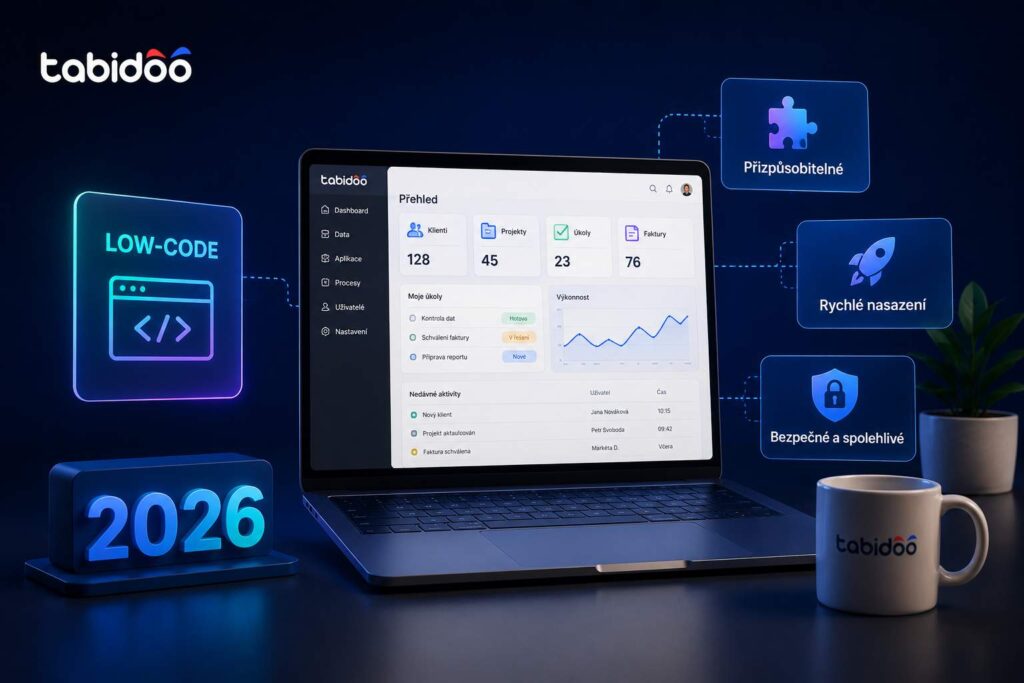
There is no single best low-code platform for every business. In 2026, the right choice depends on how quickly a platform can turn business processes into working applications, how easily those applications can be adapted without coding, and how effectively it uses artificial intelligence throughout both application design and everyday business operations. Among the best-known low-code platforms today are Microsoft Power Apps, Mendix, OutSystems, Appian, Retool, and Tabidoo. Each offers different strengths and is designed for different types of organizations.