
Workflow automation
Published May 31, 2026
Not every tool that works with data is designed to manage business processes. Notion gained popularity as a platform for documentation, knowledge sharing, and team collaboration. Tabidoo, on the other hand, was created to digitalize business operations and build applications tailored to an organization’s specific needs. What are the key differences between the two?
Author Tabidoo
8 minutes to read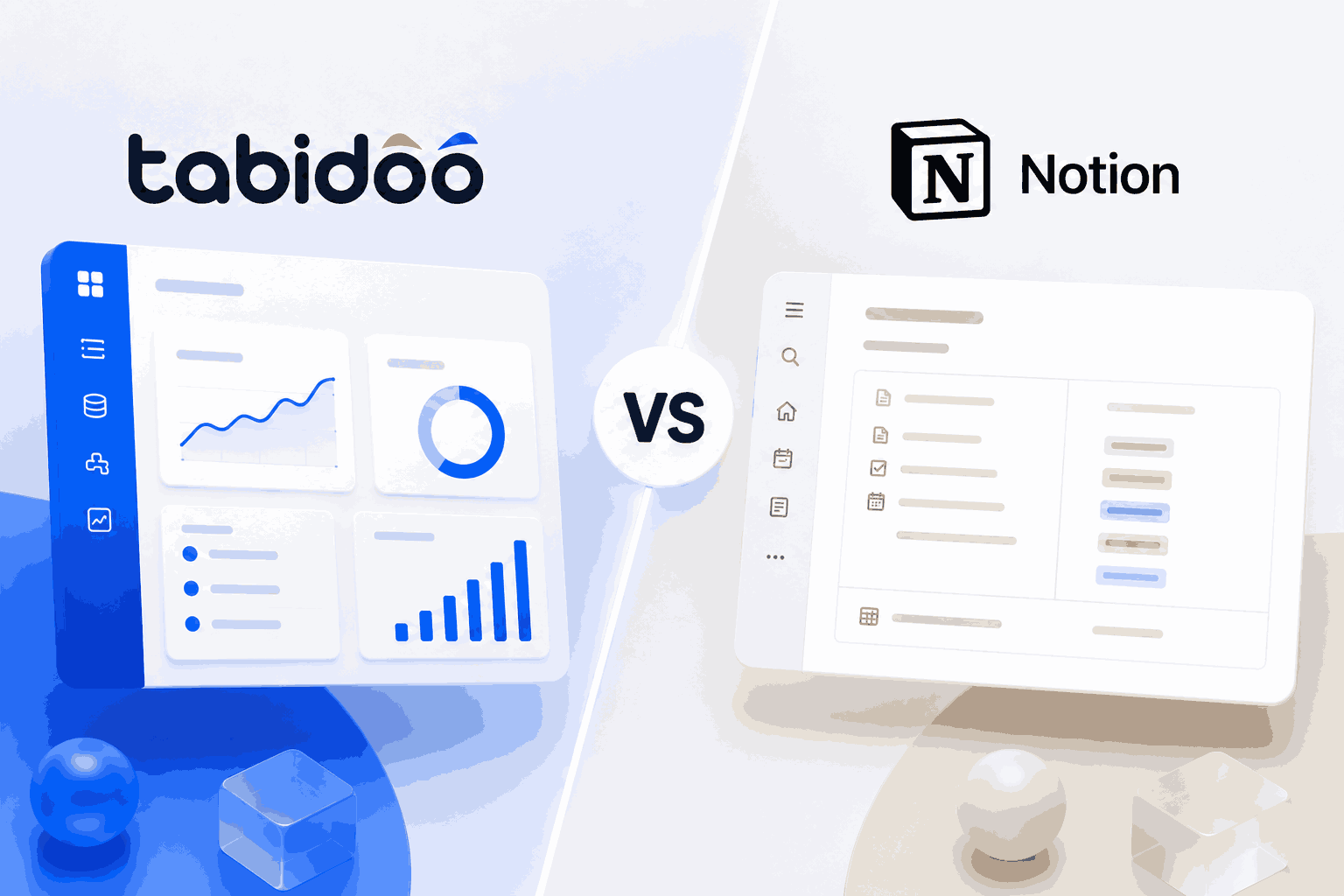
Not every tool that works with data is designed to manage business processes. Notion gained popularity as a platform for documentation, knowledge sharing, and team collaboration. Tabidoo, on the other hand, was created to digitalize business operations and build applications tailored to an organization’s specific needs. What are the key differences between the two?
Notion is one of the most popular tools for information management, documentation, and team collaboration. It is widely used by startups, marketing teams, agencies, and individuals around the world.
Its greatest strengths are simplicity and flexibility. Users can build their own systems for organizing information and work in just a few minutes.
Tabidoo is a Czech low-code platform designed for business process digitalization and the creation of custom applications without programming.
Tabidoo is not just about storing data. Its goal is to create an environment that helps companies manage their daily operations, connect departments, and reduce manual work.
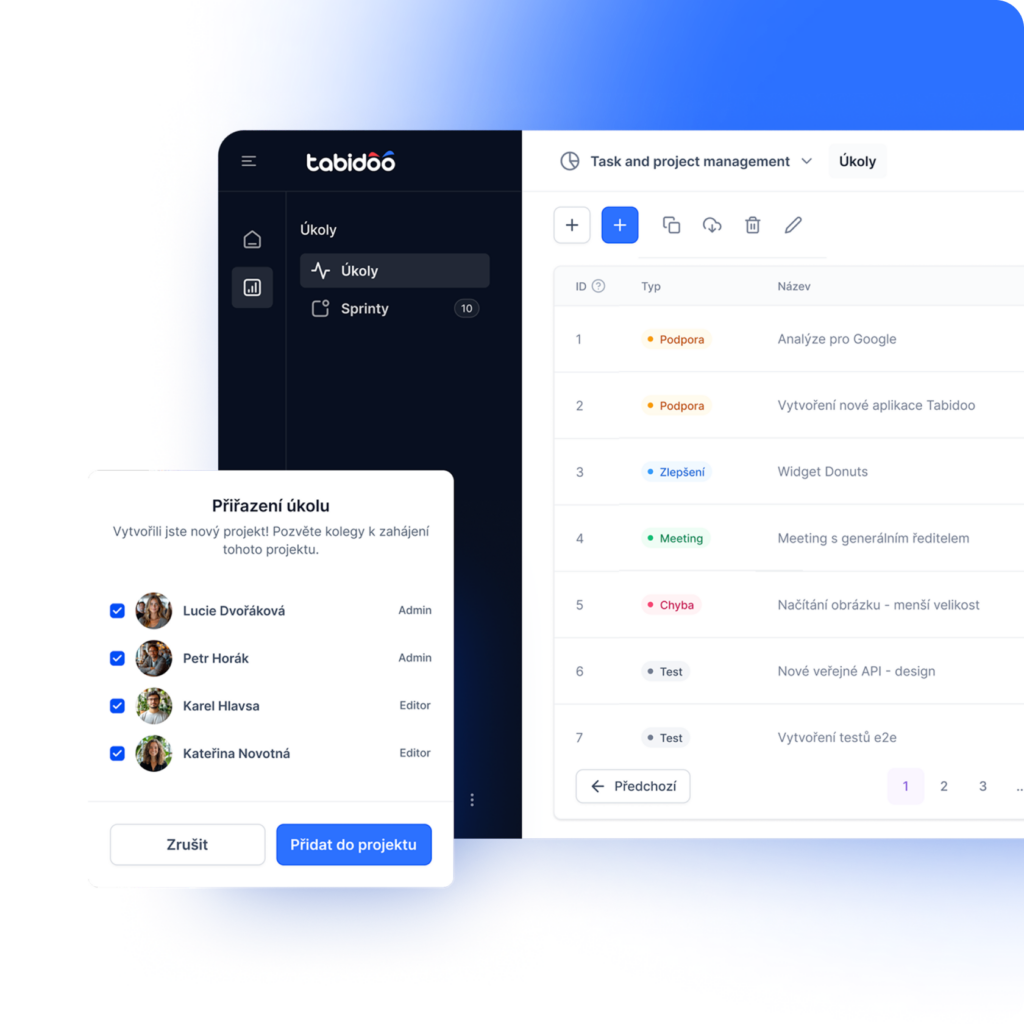
The easiest way to understand the difference between the two platforms is this: Notion manages knowledge. It helps organizations store information, documentation, internal know-how, and collaborate more effectively. Tabidoo manages business operations. It helps companies run sales, recruitment, customer service, approvals, projects, and other critical business processes within a single environment.
If you’re looking for a place where employees can easily access company information, Notion is an excellent choice.
If you’re looking for a platform that does more than organize information and actively helps manage the day-to-day operation of your business, Tabidoo is often the better fit.
Notion now offers surprisingly advanced database capabilities.
For managing tasks, content, or internal information, these features are often more than sufficient. Tabidoo, however, uses databases differently. Databases are not the end goal – they are the foundation of business applications.
The key difference is not whether databases exist, but how they are used.
This is where the biggest distinction between the two platforms becomes apparent. While Notion allows you to build highly sophisticated workspaces, Tabidoo enables you to create your own business system.
Need a CRM? A recruitment platform? A helpdesk? Order management? Service request tracking? These are exactly the types of use cases Tabidoo was designed for.
Instead of relying on dozens of separate applications, companies can create all of their business applications within a single platform in just a few clicks, tailoring them to their unique processes and requirements.
Both platforms support automation and integrations with external services. Notion primarily helps automate information management, task tracking, and documentation workflows. Tabidoo takes automation a step further by focusing on the automation of business operations themselves.
The more complex a company’s internal processes become, the more noticeable this difference is.
Notion AI is primarily focused on content creation and knowledge management. It helps users write content, summarize documents, search for information, and organize knowledge.
Tabidoo applies AI differently. It assists with form creation, application logic design, and process automation that would otherwise require manual configuration.
Development is also moving toward natural-language application creation. Tabidoo is becoming one of the first platforms of its kind that allows users to design business applications simply by describing what they need.
The result is faster deployment, reduced dependence on developers, and the ability to adapt to business changes in hours rather than weeks.
Notion became popular largely because of its user experience. Its interface is minimalist, intuitive, and highly enjoyable to use. New users can typically become productive within minutes.
Tabidoo provides a modern and user-friendly interface designed specifically for working with business applications and structured data. Users can customize screens, forms, and views according to their role and business needs.
While Notion prioritizes simplicity and content management, Tabidoo offers greater flexibility and customization options. This allows it to better accommodate the specific requirements of different teams and business processes.
When comparing pricing, it’s important to look beyond the cost of a single license and consider how many tools a company needs to support its operations. Notion offers both free and paid plans, with pricing typically based on the number of users. For documentation, project management, and company wikis, it is a very affordable solution.
However, when businesses begin managing sales, recruitment, customer service, or approval workflows, they often need to add specialized tools alongside Notion.
As a result, the total cost includes not only Notion but also the entire ecosystem of applications and integrations. Tabidoo, on the other hand, allows companies to consolidate multiple business functions into a single platform. Organizations can often manage CRM, ATS, helpdesk, project management, and approval workflows without purchasing multiple standalone systems.
One of Tabidoo’s major advantages is its licensing model. Pricing is not built around traditional per-user fees, making it easier to involve larger teams without costs growing at the same rate.
For growing companies, the key factor is often not the price of a single license, but the overall cost of operating all business tools combined.
This is a situation many growing businesses eventually face. At first, there are only a few databases, project boards, and documentation pages. Over time, sales, recruitment, customer support, and service operations are added. Each department starts using its own specialized tool. There is no shortage of information – but connections between systems begin to disappear.
Suddenly, data is scattered across multiple platforms that do not communicate effectively with one another.
Tabidoo allows companies to build their business system gradually. You can start with a CRM and later add recruitment, helpdesk, project management, or additional business functions without introducing separate tools.
This flexibility is one of the main reasons why growing companies move from specialized applications to low-code platforms. And it is also one of the reasons why businesses often transition from Notion to Tabidoo as their operational needs evolve.
Notion is an excellent platform for managing information. However, when a company needs to manage sales, recruitment, customer service, or more complex approval processes, its original focus begins to show.
Many organizations eventually add a CRM, helpdesk, ATS, or other specialized tools alongside Notion. The result is often more systems, more integrations, and greater administrative complexity.
Tabidoo offers significantly broader capabilities than traditional knowledge management tools. To unlock its full potential, companies need to think about how their processes work and how different business functions interact.
The reward is a system that adapts to the company – not the other way around.
Notion is one of the best tools available for information management, documentation, and team collaboration. However, when businesses start managing sales, recruitment, customer service, approvals, or order management, they often move beyond the scope of what Notion was originally designed to handle.
Tabidoo was created with a different goal: to digitalize the way a company operates as a whole.
It enables businesses to build custom CRM systems, ATS platforms, helpdesks, and other applications without programming, while adapting those solutions to the way the organization actually works. If you’re looking for a modern company wiki, Notion is an excellent choice.
If you’re looking for a platform that helps your business grow, automate routine operations, and unify critical business functions in a single environment, Tabidoo is often the stronger solution.
Workflow automation

Reports
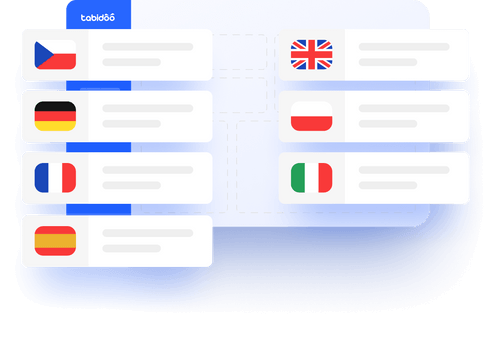
Multilingual
Quick setup, zero risk, full control.
No trial limits
No user fees
No credit card required
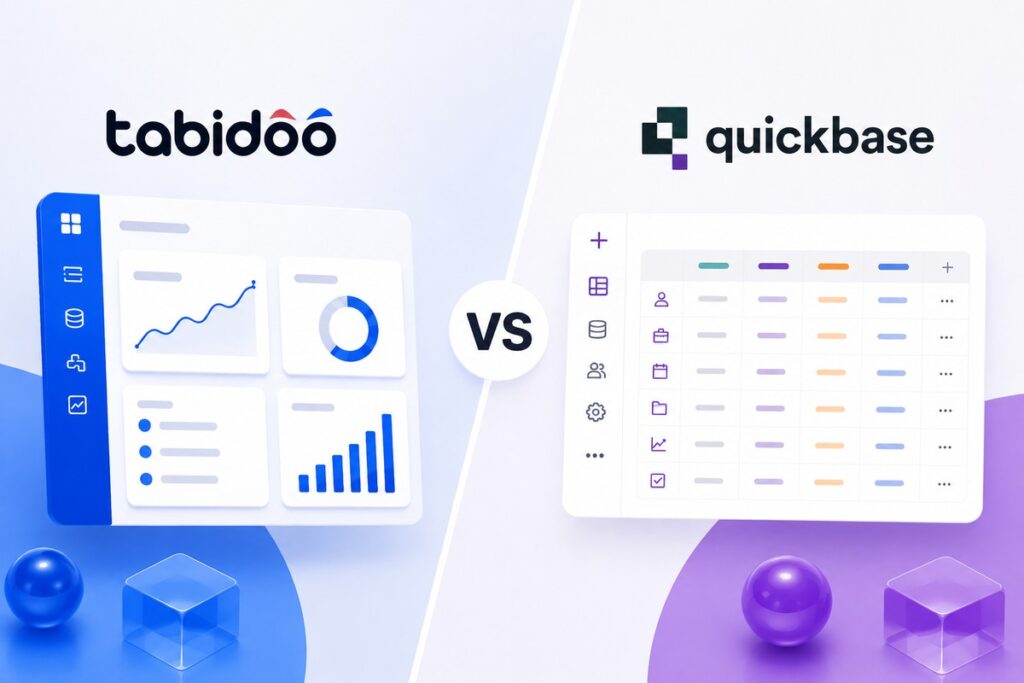
Quickbase is a mature enterprise platform for dynamic work. Tabidoo offers a focused process foundation, full AI support, an MCP server, ISO certification and unlimited users in a simpler commercial model. Where does each platform have the real advantage?
Bubble and Tabidoo both let teams build applications without traditional development, but they start from different places. Bubble gives product builders a flexible canvas. Tabidoo turns business data and processes into a governed system with full AI support and an MCP server. Which approach fits your goal?
Zoho Creator offers a broad low-code ecosystem, native mobile applications, AI and a large integration catalogue. Tabidoo combines full AI support, MCP, ISO certification, PWA, direct integrations and unlimited users in a more focused platform. Which approach fits your organisation?
Base44 and Tabidoo both put AI at the centre of application creation. Base44 excels at speed and visual impact. Tabidoo combines full AI support with governed business data, ISO certification, PWA and an MCP server for agents working with live applications. Which approach is stronger?