
Workflow automation

Published June 30, 2026
Excel disappeared. Paper folders did too. In just three months, the Lovosice Cultural Center digitized its invoice approval process, connecting every step from receiving an invoice to accounting in one seamless workflow. What once required dozens of emails, multiple Excel spreadsheets, and piles of paperwork is now handled by a single digital process. The result? Better visibility for employees, faster processing for the accounting team, and simpler oversight for management.

Interviewee Petr Kříž
5 minutes to read
The biggest change wasn’t the digitalization itself. It was that everyone started working with the same information. There’s no more searching for invoices, forwarding endless emails, or wondering who the process is waiting on.
Petr Kříž, partner Tabidoo
The Lovosice Cultural Center is a municipal organization at the heart of the city’s cultural scene. It operates a theatre and café, organizes cultural and community events, and manages multiple departments and budget centers. Every incoming invoice must therefore follow a clearly defined approval process that complies with internal policies as well as public sector regulations.
When the organization teamed up with our implementation partner, Petr Kříž, they began building a solution that moved the entire approval process from paper files and Excel spreadsheets into a single digital environment.
And Excel finally clocked out for good.
The invoice approval process worked. Just not very efficiently.
Every invoice moved between Excel spreadsheets, emails, and paper documents. Instead of focusing on their actual work, employees often found themselves searching for answers to seemingly simple questions:
On top of that, the organization had to comply with internal policies, meet legal requirements, and ensure that no document got lost along the way. Little by little, Excel took on a role it was never meant to have.
In collaboration with implementation partner Petr Kříž, a custom application built on Tabidoo was developed in just three months, digitizing the entire invoice approval process—from receiving an invoice to handing it over to the accounting department. What once relied on multiple Excel spreadsheets, emails, and paper folders now runs in a single system.
Every new invoice is uploaded to the application together with its PDF document. Based on predefined rules, projects, cost centers, and approval workflows, the system automatically assigns the right approvers. Automated email notifications keep everyone informed, so each person knows exactly when it’s their turn to take action.
The solution also integrates with ARES via Make, automatically retrieving supplier information. Once an invoice receives final approval, all supporting documents are transferred digitally to the accounting system—eliminating manual forwarding and reducing the risk of errors.
This keeps the punchy, marketing-friendly style while sounding natural in English. “The numbers tell the story” is also a common headline in English case studies and fits the Tabidoo tone well.
They used to spend time searching for information. Now they find it in seconds.
Managers can track the status of every invoice in real time. The accounting team receives approved documents automatically. Leadership has a clear overview of spending across individual cost centers, and employees no longer have to wonder who should receive a document next—the workflow takes care of it automatically.
Every invoice now has its assigned approver, complete approval history, and a clearly defined next step. Management has real-time insight into the approval process, budget consumption across cost centers, and compliance with both internal policies and public sector regulations. The accounting team receives all supporting documents automatically, while employees can focus on meaningful work instead of tracking down information.
The Lovosice Cultural Center wasn’t searching for another complex information system. They needed a solution that would adapt to their processes – not force them to adapt to the software.
Several factors made Tabidoo the clear choice:
The result is more than just a new application.
It’s a process that keeps running smoothly – even when employees are on vacation, responsibilities change, or the number of incoming invoices continues to grow.
Workflow automation
Reports
Multilingual
Quick setup, zero risk, full control.
No trial limits
No user fees
No credit card required

What happens when your existing software still works, but your business is starting to outgrow it? That was exactly the challenge facing CNC Doctors. Together with BohuTech, the service company set out to build its own business management system using the Tabidoo platform. The first usable version was ready in approximately one month. And instead of waiting for the next major software update, users can now test new features directly and refine them based on their actual needs.
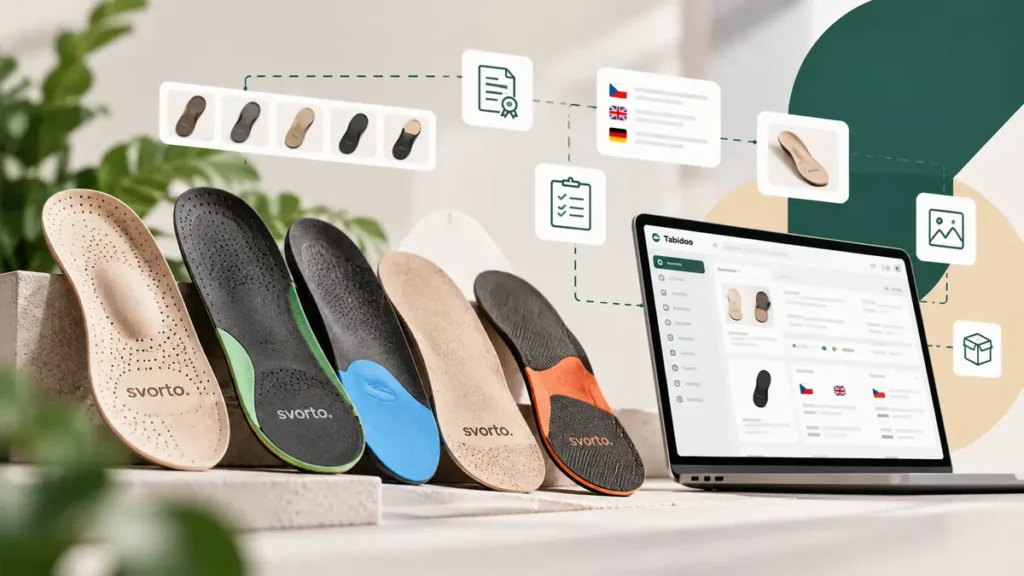
What do orthopedic products, product data, contracts, and employee attendance have in common? At Svorto, the answer is simple: Tabidoo. With more than a century of history behind it, this family-owned company teamed up with Emberix to embark on a digital transformation journey. What started with scattered product data is gradually changing the way the entire company operates. The result? Centralized data, streamlined processes, and a system that adapts to the company's needs. Not the other way around.

At the Spejbl and Hurvínek Theatre, the action doesn’t stop at the stage. Behind the scenes, there are contracts, orders, budgets and approvals to manage. Tabidoo brought these processes together in one place, cut approval times from days to minutes or hours, and saved dozens of hours of admin work. Because the less time paperwork takes, the more time there is for theatre.

For nearly ten years, Z-AGENCY ran on Google Sheets. Sales, HR, and inventory. It worked. Until the company grew to the point where spreadsheets started slowing things down instead of helping. Today, Z-AGENCY manages nearly 5,000 business cases in Tabidoo, coordinates more than 60 external collaborators, runs inventory for hundreds of events a year – and uses the same data for automation and AI.