
Workflow automation
Published August 6, 2026
Artificial intelligence (AI) will never fully replace well-designed business processes, reliable data, employee accountability, strategic decision-making, or company know-how. On the other hand, it can significantly accelerate routine tasks, data analysis, information retrieval, content creation, and administrative work.
Author Tabidoo
6 minutes to read
AI’s biggest limitation today is not the technology itself. It is the quality of the data and processes it works with. If information is scattered across emails, Excel spreadsheets, ERP systems, CRM platforms, and other business tools, AI alone will not make your company more efficient. It will simply process the existing chaos faster.
“AI doesn’t eliminate chaos. It only accelerates it.”
Modern AI tools such as ChatGPT, Microsoft Copilot, Gemini, and AI Partner in Tabidoo can already take over a significant portion of routine work. For example, they can:
This is why AI is becoming a standard part of the modern workplace.
Despite its rapid progress, there are still areas that no AI model can replace on its own.
AI cannot create a process where none exists. If it is unclear:
AI cannot solve that problem by itself.
AI is only as good as the data it works with. If information is spread across:
its outputs will inevitably be incomplete or inaccurate.
AI can recommend the next best step, but it cannot take responsibility for business decisions, investments, or customer relationships.
Every company has its own rules, workflows, approval processes, project history, and internal procedures. If this knowledge has never been digitized, AI has no way to access it.
AI does not know why a customer changed a deadline. It does not know that a supplier is delayed or that a particular project has top priority. Unless this context is stored in a system, AI cannot reliably infer it.
Many companies believe that implementing AI will automatically increase productivity. In reality, AI simply amplifies the quality of the environment it operates in. If your company has well-structured processes and reliable data, AI can significantly accelerate everyday work. If your business operates in chaos, AI will simply process that chaos faster.
Success does not depend only on which AI tool you choose. It depends on whether your company has:
That is why many organizations first digitize their business processes and only then implement AI.
Before choosing an AI solution, ask yourself a few simple questions:
If your answer to any of these questions is “no,” your biggest challenge is probably not AI—it’s the way your company manages information today.
Implementation experience consistently shows that AI delivers the greatest value in companies with organized, structured data.
A typical journey looks like this:
This approach ensures that AI becomes a natural part of everyday work instead of an isolated tool.
Imagine a field service company. A technician completes a job and sends photos via WhatsApp. The dispatcher records the outcome in Excel. The finance team waits for an email confirmation before issuing the invoice. Meanwhile, the operations manager needs to know the current status of the job.
AI alone cannot solve this problem – not because it lacks capability, but because the information is scattered across four different places. If all this information is stored in one system, AI can answer questions such as:
The difference is not the quality of AI. The difference is the quality of the data AI can work with.
AI Partner in Tabidoo is not a general-purpose chatbot.
Once business data is centralized, AI can begin creating real business value. That is exactly how AI Partner in Tabidoo works. It operates directly on your company’s data, helping employees find information faster, analyze situations, and automate routine work.
Because it works directly with data stored in your business applications, AI Partner can:
Unlike general AI assistants, AI Partner understands the context of your business rather than relying solely on general knowledge. Every company is unique – and AI Partner is designed to work that way.
AI will never fully replace well-designed business processes, human accountability, company know-how, strategic decision-making, or high-quality business data.
AI can take over many routine administrative tasks, data analysis, document creation, information retrieval, and report generation.
The most common reason is not the AI itself, but poor-quality data, disconnected systems, and undefined business processes.
In most cases, yes. The better your data and business processes, the greater the value AI can deliver.
Nor is it a replacement for a poorly managed business. It is an amplifier.
With high-quality data, clear processes, and the right context, AI can significantly increase business productivity. If your company still relies on emails, spreadsheets, and information stored only in employees’ heads, AI will not solve those problems.
That is why companies that get the greatest value from AI do not start by asking: „Which AI tool should we use?” They start by asking: „Does our AI actually have the right data to work with?”
Workflow automation

Reports
Multilingual
Quick setup, zero risk, full control.
No trial limits
No user fees
No credit card required

Excel is no longer enough for your business when managing spreadsheets takes more time than actually working with the data. Common warning signs include duplicate information, manual data entry, disorganized order management, complicated approval processes, and reporting that depends on a single employee. If spreadsheets have become the main tool for managing your business processes, it may be time to switch to a connected business application like Tabidoo.
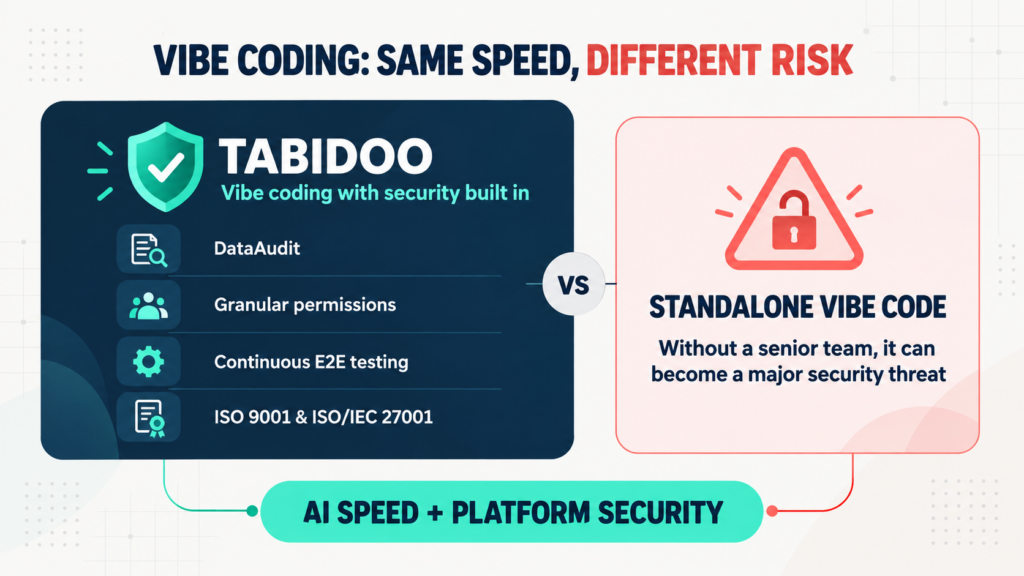
Vibe coding delivers speed, but not automatic security. Tabidoo combines AI with DataAudit, granular permissions, continuous E2E testing and certified processes.
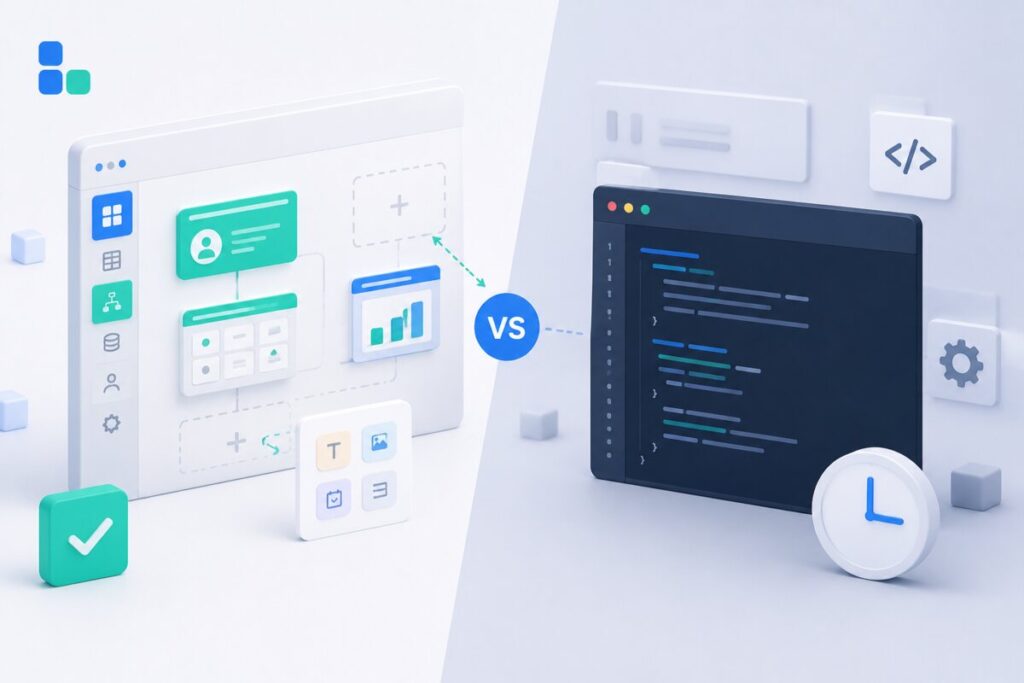
Learn when to build an internal app in Tabidoo – with no per-user fees, flexible workflows, role-based access, audit history, API and custom logic.

Tabidoo is one of the best alternatives to Excel for managing business processes if you want to connect data, automate workflows, and build custom applications without coding. This Czech no-code/low-code platform allows businesses to replace disconnected spreadsheets with an integrated system for managing customers, orders, projects, and other operations. With Tabidoo AI, you can even start with an Excel spreadsheet you already use.