
Workflow automation
Published July 17, 2026
Building a custom business application no longer means hiring developers and waiting months for the first version. Thanks to no-code platforms and artificial intelligence, companies can design business applications using natural language, visual interfaces, and pre-built components. AI helps turn ideas into functional application designs, while a no-code platform allows you to build and customize the application without writing a single line of code.
Author Tabidoo
6 minutes to read
The biggest shift isn’t that applications can be built faster. It’s that the entire approach to building them has changed. In the past, creating a business application meant finding a software developer.
Today, the first step is understanding and describing the business process you want to digitize. Much of the rest can be handled by the combination of AI and a no-code platform.
Most companies believe building a new application starts with technology. In reality, it starts with questions. How does a customer request enter your business today? Who takes ownership of it? Where does the process usually slow down? What information do employees search for repeatedly? Who approves the next step? The answers to these questions define how your future application should work.
Technology comes later.
That’s why the greatest value of AI today isn’t its ability to generate code. Its real value lies in helping businesses understand their processes and translate them into a digital solution.
Imagine you want to build an application for managing service jobs. You don’t need to think about databases or tables. You simply describe what you need: „I need an application to manage service jobs. Once the work is completed, the technician uploads photos, the customer signs the service report, and the manager approves the invoice.”
From that moment, the roles change. Instead of you asking the questions, AI starts asking them.
Every answer refines the future application. You’re no longer building it by clicking through menus. You’re building it through a conversation.
In a traditional software project, business analysts spend hours understanding how a company operates. They ask about processes, roles, documents, exceptions, approvals, and responsibilities. Today, AI can handle much of that initial discovery. This doesn’t mean business analysts will disappear.
It means the first draft of an application can be created much faster. AI helps identify missing information, suggests a data structure, and highlights areas where the process may be inefficient.
People still make the most important decisions. They decide how the business should operate.
Modern AI can do far more than generate text. When designing business applications, it can help:
As a result, both application development and the analysis phase become significantly faster.
Your business. It doesn’t know why one customer follows a different approval process, it doesn’t know which projects always take priority and it doesn’t know your internal exceptions. It doesn’t know why two departments communicate differently from everyone else. That’s why human context remains irreplaceable.
AI proposes. You decide.
AI Partner in Tabidoo isn’t designed as a generic chatbot. Its purpose isn’t to answer general questions. It helps businesses design, build, and improve applications using their own business data.
Imagine opening a new application and simply saying: „I need an onboarding application for new employees.” AI Partner starts the conversation. It asks about onboarding steps, required documents, responsible people, deadlines, and approval processes.
Based on your answers, it helps design forms, workflows, automations, and the overall application structure. And its role doesn’t end once the application is live.
It continues helping employees search for information, analyze business data, generate reports, and recommend the next steps in daily operations.
AI Partner doesn’t just become part of the application. It becomes part of the way business applications are designed, used, and continuously improved.
Modern no-code platforms allow companies to build virtually any internal business application without writing a single line of code.
Some of the most common examples include:
These aren’t generic software products. They’re applications designed around the way your business actually works.
Many companies begin by asking: „What application do we need?” A better question is: „What problem are we trying to solve?” Great applications aren’t built because a company wants new software.
They’re built because the company wants to eliminate repetitive manual work, stop searching for information, or improve inefficient processes.
Technology comes second. The business problem comes first.
Using a no-code platform like Tabidoo, you can build a custom business application without writing code. AI also helps design data models, forms, workflows, and automations.
AI can dramatically accelerate application design and recommend structures, workflows, and automations. The final application, however, should always reflect the unique processes and requirements of your business.
Simple applications can often be built within hours or days. More advanced business systems are typically completed within a few weeks.
You can build CRM systems, help desks, project management tools, HR applications, asset management systems, approval workflows, service management applications, and many other business solutions.
A few years ago, technology was the biggest barrier to building a business application. Today, it’s often an unclear or undocumented business process. No-code platforms have removed the need for programming.
AI has simplified application design by helping companies translate business processes into functional digital solutions. The biggest change isn’t that applications are built faster. The biggest change is that you’re no longer designing them alone.
AI becomes a partner that asks the right questions, suggests better solutions, and helps transform ideas into working business applications faster than ever before.
Workflow automation
Reports
Multilingual
Quick setup, zero risk, full control.
No trial limits
No user fees
No credit card required

Excel is no longer enough for your business when managing spreadsheets takes more time than actually working with the data. Common warning signs include duplicate information, manual data entry, disorganized order management, complicated approval processes, and reporting that depends on a single employee. If spreadsheets have become the main tool for managing your business processes, it may be time to switch to a connected business application like Tabidoo.
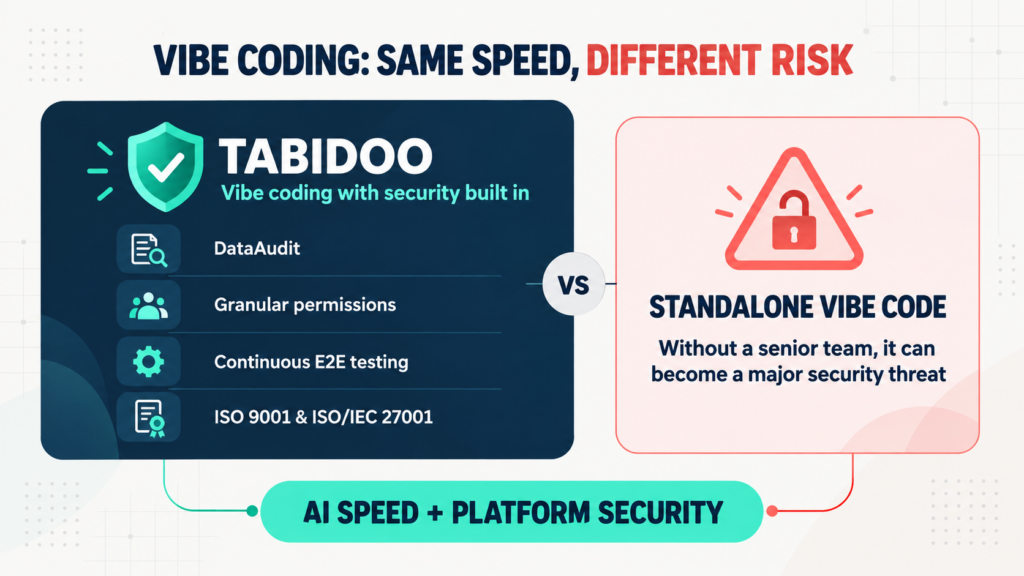
Vibe coding delivers speed, but not automatic security. Tabidoo combines AI with DataAudit, granular permissions, continuous E2E testing and certified processes.
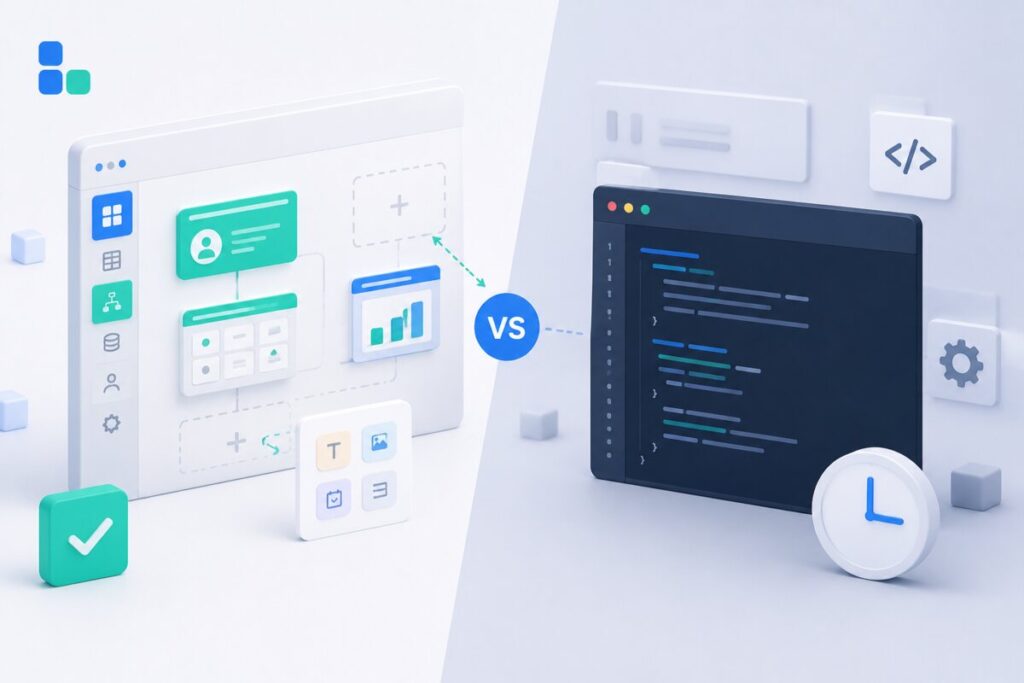
Learn when to build an internal app in Tabidoo – with no per-user fees, flexible workflows, role-based access, audit history, API and custom logic.

Tabidoo is one of the best alternatives to Excel for managing business processes if you want to connect data, automate workflows, and build custom applications without coding. This Czech no-code/low-code platform allows businesses to replace disconnected spreadsheets with an integrated system for managing customers, orders, projects, and other operations. With Tabidoo AI, you can even start with an Excel spreadsheet you already use.