
Workflow automation
Published July 25, 2024
In recent years, there has been a significant increase in the number of women entering the information technology field, and low-code platforms such as Tabidoo play a key role in this process. These technologies enable the creation of applications with minimal knowledge of traditional programming, lowering the barriers to entry into the IT industry. Women who excel in diligence, attention to detail and analytical thinking find in low-code the ideal tool to realize their abilities. This article looks at how low-code platforms can contribute to closing the gender pay gap in IT, and showcases initiatives such as Czechitas and Digifemme that promote women's participation in the digital world.
Author Tabidoo
5 minutes to read
In recent years, there has been a significant increase in the number of women entering the information technology (IT) industry. This trend is supported by a number of initiatives and programmes aimed at increasing gender diversity in technology companies. Despite this, women still face a number of challenges, including gender bias, pay inequality and lack of leadership roles. Although the situation is gradually improving, further efforts are needed to achieve full equality.
One area that offers significant opportunities for women in IT is low-code and no-code platforms. These technologies allow the creation of applications with little or no knowledge of traditional programming. This opens the door to a wider range of people, including women, who may not have formal technical training but have strong analytical and creative skills.
One of the leading platforms in the field of low-code is Tabidoo, which facilitates application development without the need for deep programming knowledge. Tabidoo provides users with intuitive tools that allow them to create applications quickly and efficiently, making it ideal for women looking to enter the IT field.
Low-code platforms can play a key role in closing the gender wage gap in the IT sector:
Easier entry into IT: Low-code platforms reduce barriers to entry into the IT industry, allowing more women to get involved in technology projects. This increases the number of women in IT and creates pressure for equal pay.
Fast adoption: Women who join IT through low-code platforms can add value and implement their ideas faster. This can lead to faster career growth and thus higher wages.
Transparent remuneration: The use of low-code platforms can increase transparency and standardisation of processes, which can lead to fairer remuneration based on performance and results rather than gender bias.
Some specific characteristics of women predispose them to be excellent implementers of low-code solutions:
Carefulness: Women often excel in care and thoroughness, which is key when working with low-code platforms. Every detail is important for proper functionality and successful implementation.
**The ability to focus on details and evaluate them carefully is another strength that is essential when designing and testing applications. Details can significantly impact the user experience and overall effectiveness of a solution.
Analytical Thinking: Women often demonstrate strong analytical skills, which enables them to effectively solve problems and optimize processes within low-code platforms.
Empathy and Communication: Good communication and the ability to understand user needs are key to successful implementation of low-code applications. Women often excel in these soft skills, enabling them to better understand and respond to client requirements.
Despite these advantages, women in IT still face several key challenges:
There are several initiatives that support women in IT and promote the use of low-code technology:
Several women have achieved significant success in IT through the use of low-code platforms:
Low-code and no-code platforms represent a significant opportunity for women in IT, facilitating their entry into technology fields and enabling them to innovate quickly. While there are challenges to overcome, it is important to continue to promote gender equality and create an inclusive environment for all IT workers. These platforms can play a key role in closing the gender pay gap, contributing to a fairer and more equal working environment.

Workflow automation

Reports
Multilingual
Quick setup, zero risk, full control.
No trial limits
No user fees
No credit card required
Recent PHP security vulnerabilities have raised concerns about the security of websites and applications. What’s happening, who is affected, and why can Tabidoo users continue working without worrying about these specific vulnerabilities?

Excel is no longer enough for your business when managing spreadsheets takes more time than actually working with the data. Common warning signs include duplicate information, manual data entry, disorganized order management, complicated approval processes, and reporting that depends on a single employee. If spreadsheets have become the main tool for managing your business processes, it may be time to switch to a connected business application like Tabidoo.
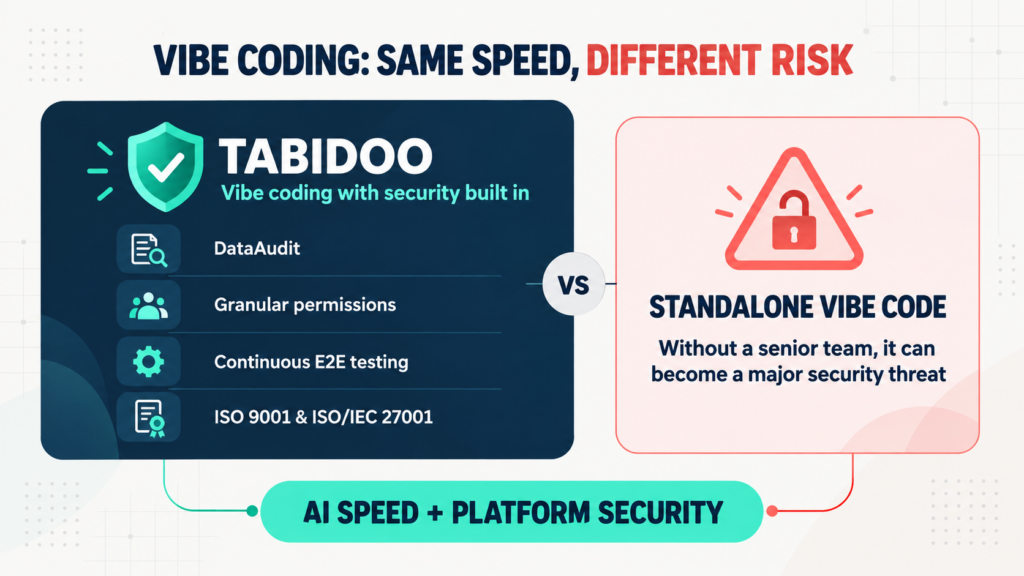
Vibe coding delivers speed, but not automatic security. Tabidoo combines AI with DataAudit, granular permissions, continuous E2E testing and certified processes.
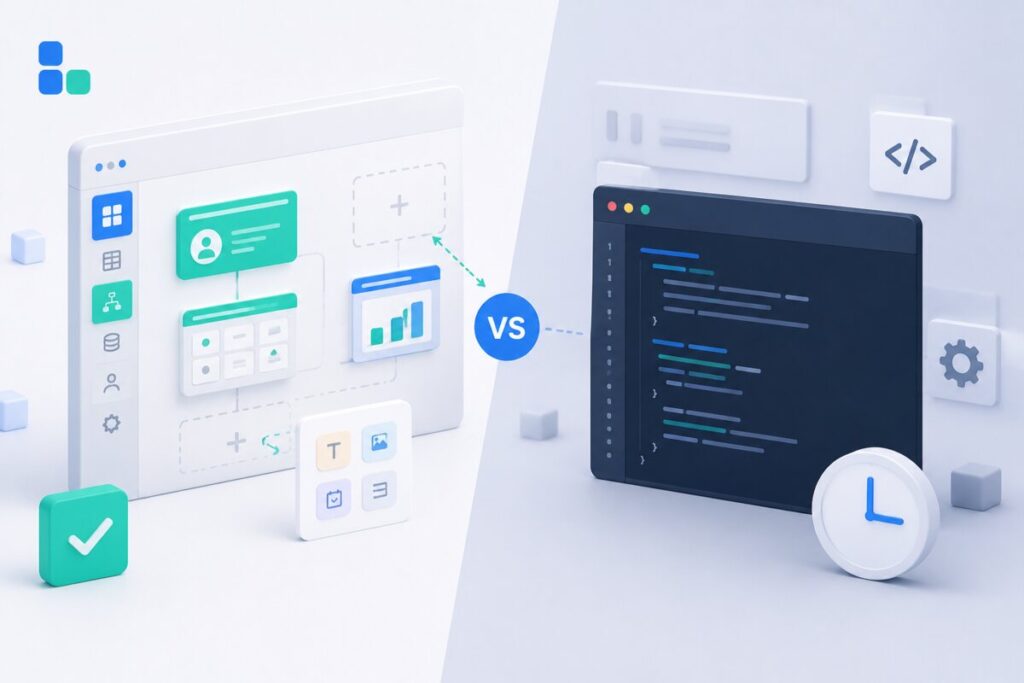
Learn when to build an internal app in Tabidoo – with no per-user fees, flexible workflows, role-based access, audit history, API and custom logic.