
Workflow automation
Published July 8, 2024
According to Gartner, the use of Low-Code platforms brings 70-90% time and cost savings compared to traditional development. This effect is not only in cost, but also in the different approach and development lifecycle. Traditional programming requires a coherent assignment and handover of work between the developer and the programmer, whereas Low-Code supports iterative development with immediate application deployment. In this paper, we compare the development of a task logging application using C# and the Tabidoo platform.
Author Tabidoo
4 minutes to read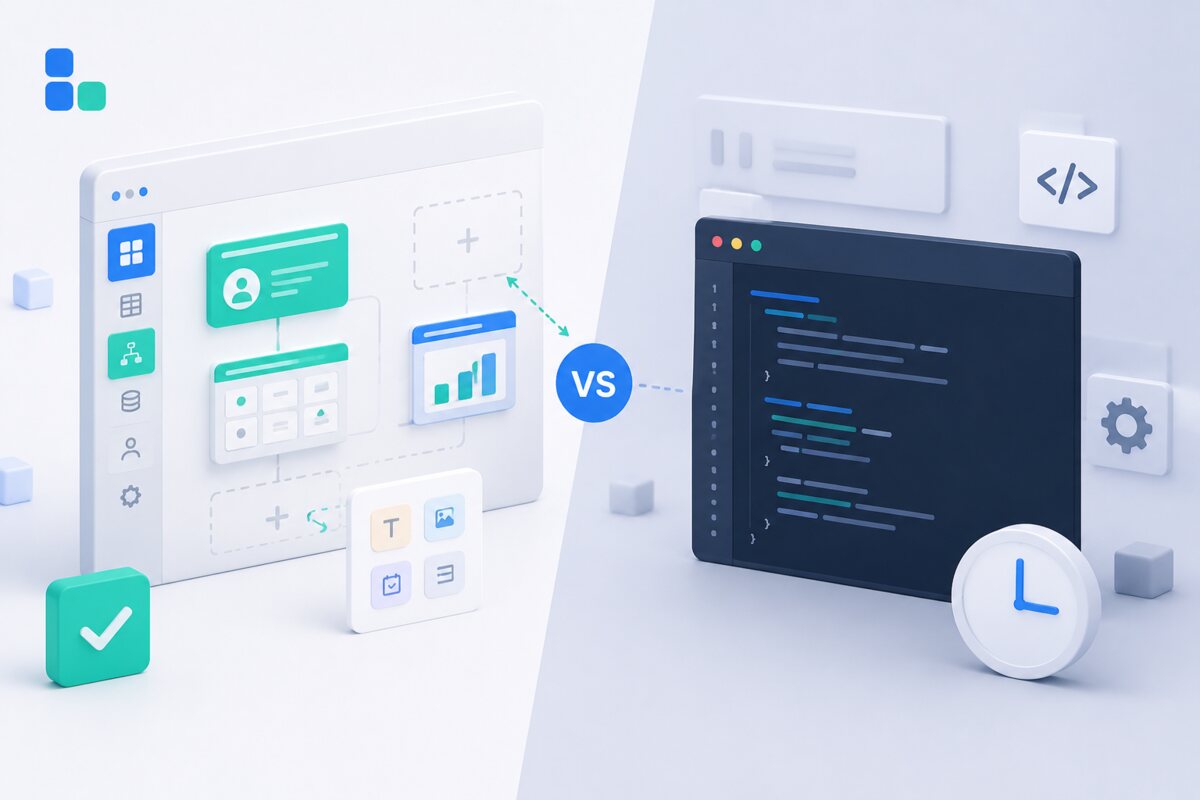
According to Gartner, using the Low-Code platform brings 70-90% savings in time and money compared to traditional development. The positive effect of engaging the Low-Code platform lies not only in the cost comparison itself, but also in a completely different approach to application development and a different life cycle. Conventional development using programming languages implies a coherent assignment and handover of work between the client and the programmer. On the other hand, application development on the Low-Code platform better supports iterative development with the ability to use the application immediately.
For more information on the benefits of Low-Code platforms according to Gartner, see Mendix and Gartner【13†source】.
The task tracking application, called “Task Tracker”, will contain two main tables: Tasks and Employees.
Create a Task model:
csharp public class Task { public int Id { get; set; } public string Title { get; set; } public string Description { get; set; } public string Status { get; set; } public DateTime DueDate { get; set; } public int ResponsibleEmployeeId { get; set; } public Employee ResponsibleEmployee { get; set; } }
Create an Employee model: “csharp public class Employee { public int Id { get; set; } public string Name { get; set; } public string Email { get; set; } }
“`
“`csharp using Microsoft.EntityFrameworkCore;
public class TaskContext : DbContext
{
public DbSet
protected override void OnConfiguring(DbContextOptionsBuilder optionsBuilder) { optionsBuilder.UseSqlite(“Data Source=tasks.db”); } } “
“`csharp using System; using System.Linq;
class Program { static void Main(string[] args) { using (var db = new TaskContext()) { db.Database.EnsureCreated();
// Add a new employee Console.WriteLine(“Adding a new employee”); var employee = new Employee { Name = “John Doe”, Email = “[email protected]” }; db.Employees.Add(employee); db.SaveChanges();
// Add new task Console.WriteLine(“Adding a new task”); db.Tasks.Add(new Task { Title = “Test Task”, Description = “This is a test task”, Status = “New”, DueDate = DateTime.Now.AddDays(1), ResponsibleEmployeeId = employee.Id }); db.SaveChanges();
// List all tasks Console.WriteLine(“Listing all tasks:”); var tasks = db.Tasks.Include(t => t.ResponsibleEmployee).ToList(); foreach (var task in tasks) { Console.WriteLine($”- {task.Title} (Due: {task.DueDate}, Responsible: {task.ResponsibleEmployee.Name})”); } } } } }
Total: approximately 6-10 hours
Tabidoo is a no-code platform that allows you to quickly create applications without writing code. Below is a brief description of how to create a task logging application using Tabidoo:
Add a new table called “Tasks”.
Add columns for each task attribute:
Subject (simple text field)
Description (extended text field)
Status (drop-down list with options New, Active, Done, Cancelled)
Due by (date)
Responsible person (link to Employees table)
Add a new table called “Employees”.
Name (simple text field)
Login (simple text field of email type)
Total: approximately 40-60 minutes
Using C#:
Using Tabidoo:
Using Tabidoo is significantly faster and simpler for basic task-recording applications, while C# provides greater customization and extensibility for more complex scenarios.
Workflow automation

Reports

Multilingual
Quick setup, zero risk, full control.
No trial limits
No user fees
No credit card required

Recent PHP security vulnerabilities have raised concerns about the security of websites and applications. What’s happening, who is affected, and why can Tabidoo users continue working without worrying about these specific vulnerabilities?

Excel is no longer enough for your business when managing spreadsheets takes more time than actually working with the data. Common warning signs include duplicate information, manual data entry, disorganized order management, complicated approval processes, and reporting that depends on a single employee. If spreadsheets have become the main tool for managing your business processes, it may be time to switch to a connected business application like Tabidoo.
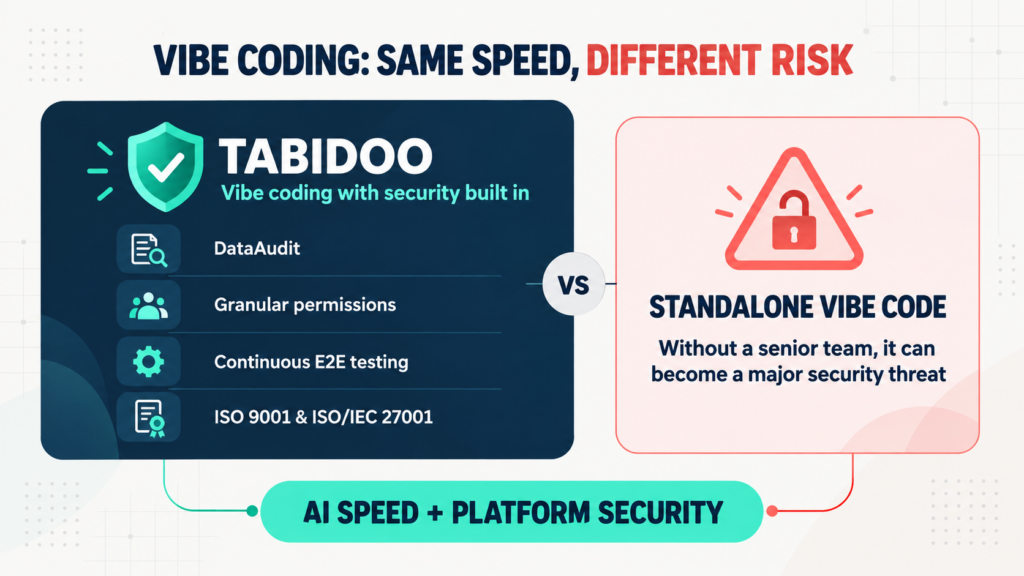
Vibe coding delivers speed, but not automatic security. Tabidoo combines AI with DataAudit, granular permissions, continuous E2E testing and certified processes.
Learn when to build an internal app in Tabidoo – with no per-user fees, flexible workflows, role-based access, audit history, API and custom logic.