
Workflow automation
Published May 21, 2026
Widget creation in Tabidoo shows how to transform ordinary data into clear and understandable dashboards that help teams better interpret information and, consequently, make faster decisions. While raw data alone is often difficult to navigate, properly designed widgets make key insights visible immediately and, at the same time, simplify everyday work with applications.
Author Tabidoo
3 minutes to read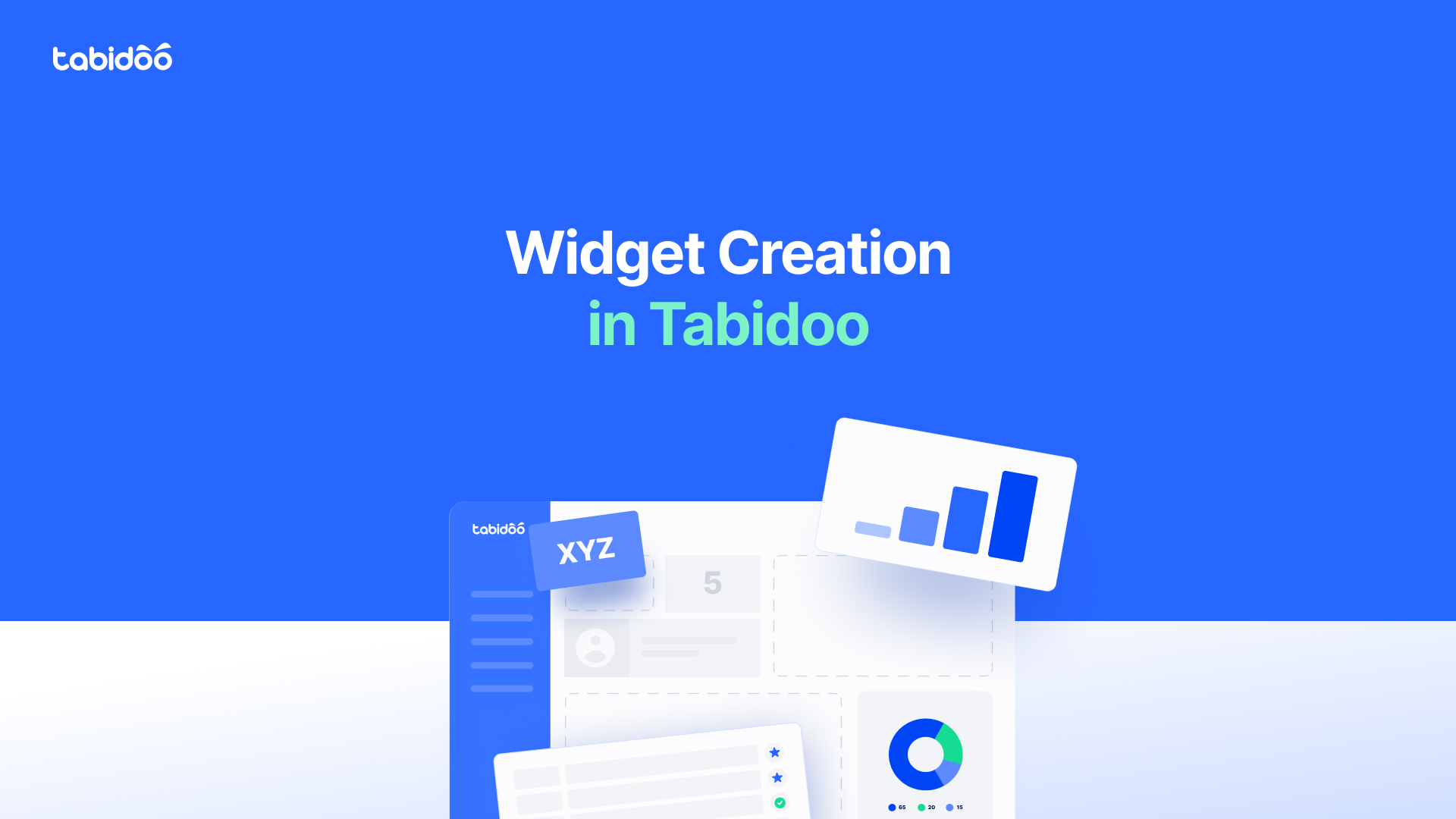
Widget creation in Tabidoo shows how to transform ordinary data into clear and understandable dashboards that help teams better interpret information and, consequently, make faster decisions. While raw data alone is often difficult to navigate, properly designed widgets make key insights visible immediately and, at the same time, simplify everyday work with applications.
Instead of manually searching through large tables, users can therefore focus only on the values and information that matter most in a given moment.
Every widget starts with selecting the right data source. Next, it is important to decide how the data should be displayed and which type of visualization makes the most sense for a specific use case.
During widget creation, you will therefore work with:
As a result, one table can provide multiple different views depending on what you need to monitor, compare, or analyze.
The purpose of dashboards is not simply to fill the screen with charts and numbers. Instead, a well-designed dashboard should help users quickly understand what is happening and where attention is needed most.
Because of that, it is important to think about:
Consequently, properly configured widgets improve orientation in data and, moreover, make dashboards much easier to use on a daily basis.
Filters and grouping also play a major role in widget creation. Thanks to these settings, dashboards can display only relevant data and, furthermore, organize information into clearer categories, statuses, or conditions.
Therefore, widgets do not need to show everything at once. Instead, they can focus only on the information that is important in a specific situation.
This is especially useful for:
Once widgets are properly configured, data stops being just a collection of numbers and records. Instead, dashboards become a practical tool for understanding what is currently happening inside the application.
That is exactly why widget creation in Tabidoo is such an important part of working with dashboards – because it helps present data in context while simultaneously making information easier to understand, compare, and evaluate.
💡 Additionally, we recommend enabling subtitles while watching the video for easier orientation throughout the individual steps.
Workflow automation
Reports
Multilingual
Quick setup, zero risk, full control.
No trial limits
No user fees
No credit card required
Today, many companies operate in a mix of Excel spreadsheets, emails, notes, disconnected tables, and multiple separate systems that often do not communicate with each other effectively. As a result, businesses face lost information, duplicated work, unnecessary administration, and processes that slow people down instead of helping them move faster. And this is exactly where Tabidoo starts to make sense. So, what is Tabidoo?
Every digital transformation has a starting point. And in the case of Tabidoo, that first step is registration. The good news? It only takes a few minutes. So, how does Tabidoo registration work?
Not every application has to be built from scratch. In fact, one of the fastest ways to get started in Tabidoo is by using ready-made templates. Whether you need a CRM system, task management, HR records, a helpdesk, asset management, or project management, templates allow you to start working almost immediately. And that is exactly where their biggest strength lies. So how to creating applications from Templates in Tabidoo?
Every application in Tabidoo starts with one important thing – a properly designed table. Tables form the foundation of the entire application because they determine how data will work, how records will connect with each other, and how easily the application can be expanded in the future.